

The Hidden Threat of Remote Avalanches
Imagine standing on a perfectly flat, snowy field, feeling completely secure. Suddenly, a massive slab of snow releases on the steep mountain face far above you. This is the terrifying reality of a remotely triggered avalanche.
For many backcountry enthusiasts, the assumption is that if you aren't on a steep slope, you aren't in danger. However, nature often has other plans when the snowpack is unstable.
What Exactly Is a Remotely Triggered Avalanche?
A remotely triggered avalanche occurs when a collapse or crack starts at your location and travels across the snow. This crack propagates into adjacent, steeper terrain, causing a slab to release from a distance.
These events are particularly deceptive because you don't actually have to be on the slope that slides. You could be traveling on a flat area below, above, or even next to the avalanche path.
According to safety experts at Wikipedia, understanding how snow layers interact is vital for survival. When a weak layer fails, that failure can shoot across the landscape like a lightning bolt.
How Cracks Move Across the Landscape
The scary part about these avalanches is how far the failure can travel. In some recorded cases, skiers have triggered slides from over 1,500 feet away while standing in low-angle areas.
When you step on a sensitive snowpack, you might hear a 'whumpf' sound. This is the sound of air escaping as a weak layer collapses under your weight.
The Danger to Snowmobilers and Skiers
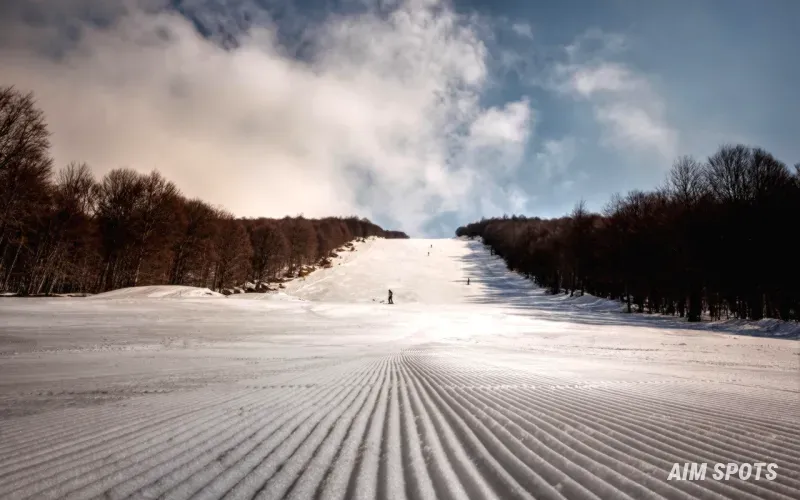
- Snowmobilers: Heavy machines can easily collapse weak layers while riding in flat meadows below steep slopes.
- Skiers: A skier might trigger a slide from a ridge above a bowl without ever dropping in.
- Adjacent Travelers: Simply walking near the base of a mountain can be enough to send a crack up the hillside.
Managing Your Overhead Hazards
Because remote triggers are possible, managing overhead hazards is a non-negotiable skill for winter travel. You must always look up and assess what is hanging above you, even if your current path feels easy.
If the avalanche forecast mentions 'remote triggering' as a concern, it is a major red flag. This means the snowpack is extremely 'touchy' and capable of transmitting energy over long distances.
Always keep a wide margin of safety and avoid the runout zones of steep slopes during high-risk periods. Stay vigilant, stay informed, and never assume that flat ground is a total safety zone in the backcountry.
Enjoyed Why Flat Terrain Isn't Always Safe: Remote Avalanche Dangers? Why not explore our other posts, such as Cappadocia Balloon Guide: Overcome Fear & Fly Over Fairy Chimneys, Surviving the Snow: How to Research the Deadliest US Avalanches, and Ultimate Sherpa Trek Guide: Plan Your Dream Himalayan Adventure.
Comments (0)