

Have you ever stepped out of your tent in Ontario's gorgeous backcountry, ready to greet the morning sun, only to feel like your skin has suddenly caught fire? You look down at your arms, expecting to see a giant mosquito or a buzzing horsefly, but you see absolutely nothing. Welcome to the frustrating, maddening world of biting midges, also known as no-see-ums.
These microscopic monsters are the bane of outdoor enthusiasts across Canada. While Ontario offers some of the most breathtaking wilderness landscapes in North America, it also harbors some of the most brutal biting insect populations on the planet. If you are planning a camping trip, a cottage getaway, or a hiking expedition, knowing where these pests thrive can save you from a week of sleepless nights and endless scratching.
In this comprehensive guide, we will dive deep into the absolute worst places in Ontario for biting midges. We will explore the biology of these tiny terrors, identify the seasonal peaks, and provide you with expert-backed survival strategies to keep your skin intact during your next northern adventure.
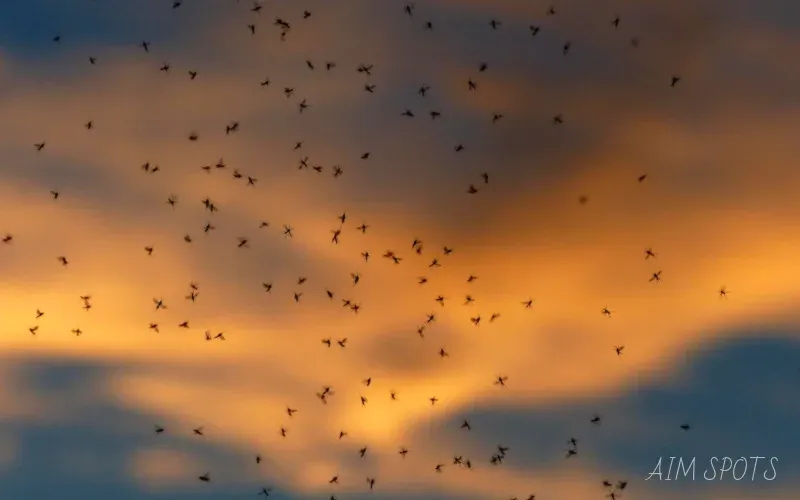
The Tiny Terrors: Understanding Ontario's Biting Midges
To defeat your enemy, you must first understand them. Biting midges belong to the biological family Ceratopogonidae. Unlike their larger cousins, the non-biting midges (chironomids) which merely swarm annoyingly around lights, biting midges are active blood-feeders. They are so small, usually measuring between one and three millimeters, that they can easily pass through standard window screens and cheap mosquito netting.
Do not let their minuscule size fool you. The bite of a no-see-um is disproportionately painful. Unlike mosquitoes, which use a needle-like proboscis to cleanly pierce your skin, midges possess tiny, scissor-like mouthparts. They literally slice your skin open, inject a specialized saliva to prevent clotting, and pool the blood to lap it up. This crude feeding method is why their bites burn so intensely and often swell into angry, itchy red welts that last for days.
Furthermore, female midges require blood meals to develop their eggs. This means their drive to bite you is purely evolutionary. They are relentless, highly persistent, and will search for any exposed patch of skin to satisfy their biological needs. Understanding this behavior is crucial for anyone planning to venture into Ontario's great outdoors.
The Absolute Worst Spot: Algonquin Provincial Park and the Boreal Shield
If you ask any seasoned backcountry camper where they experienced their worst insect nightmare, the answer is almost always Algonquin Provincial Park. Algonquin is a crown jewel of Ontario's park system, boasting thousands of lakes, dense pine forests, and pristine maple hills. Unfortunately, this exact geography makes it the absolute ground zero for biting midges in the province.
The Canadian Shield terrain of Algonquin is characterized by acidic soils, slow-draining wetlands, bogs, and endless shorelines. Biting midges lay their eggs in damp, organic-rich soil, mud, and decaying vegetation near water sources. The vast, undisturbed wetlands of Algonquin provide billions of square meters of perfect breeding habitat. When the spring melt finishes and the temperatures rise, the hatch is nothing short of apocalyptic.
During the peak season, which typically runs from late May through early July, the interior campsites of Algonquin can become virtually uninhabitable for unprepared travelers. The windless, shaded portages and low-lying campsites along sluggish rivers are particularly brutal. Step off the canoe dock on a humid June evening, and you will quickly find yourself enveloped in a cloud of invisible, biting needles.
Runner-Up Hotspots: Muskoka, Haliburton, and Georgian Bay
While Algonquin takes the crown, other popular regions in Ontario are not far behind. The Muskoka and Haliburton cottage regions are famous for luxury lakeside living, but they are also prime midge territory. The heavy forest canopy in these areas keeps the ground damp and shaded, preventing the sun from drying out the leaf litter where midge larvae thrive.
Georgian Bay presents a slightly different but equally brutal challenge. The thousands of rocky islands and sheltered inlets create pockets of stagnant water and damp mossy crevices. On calm days, when the breeze off the main lake dies down, the midges emerge from these rocky hiding spots in massive numbers. Cottagers and boaters often find themselves trapped indoors during what should be the most beautiful hours of the day.
Further north, the regions around Sudbury, Killarney, and the boreal forests stretching toward James Bay experience intense midge pressure. In these northern zones, the summer season is short, forcing the insect populations to compress their life cycles. This results in incredibly dense, highly aggressive swarms that can overwhelm both humans and wildlife alike.
The Science of the Swarm: When and Why They Strike
Biting midges are highly sensitive to environmental conditions, and understanding their daily rhythms is key to avoiding them. Because they are so incredibly light, they are terrible flyers. Even a gentle breeze of five to ten kilometers per hour is enough to blow them away and keep them grounded. Therefore, you will rarely experience severe midge attacks on windy points or open water.
Instead, they wait for the calm. The hours around dawn and dusk are their primary hunting times, as the wind typically dies down and the humidity rises. They are also highly active on overcast, muggy summer days when the sun is hidden. High humidity prevents their tiny bodies from drying out, allowing them to venture further from their damp breeding grounds in search of a meal.
Midges are attracted to their hosts through a combination of sensory cues. They detect carbon dioxide from your breath, body heat, and lactic acid emitted through your sweat. They are also highly visual creatures, drawn to dark colors and movement. If you are hiking up a steep trail on a humid, windless evening wearing a black t-shirt, you are essentially broadcasting a giant neon sign inviting every midge in the forest to dinner.
Survival Guide: How to Protect Yourself from the Bite
If you still plan to visit Ontario's beautiful but buggy regions, you must prepare like a pro. Standard insect defense strategies often fail against midges due to their tiny size and sheer numbers. Here is your step-by-step survival guide to keeping the bites to a minimum.
- Upgrade Your Mesh: Standard mosquito netting on tents and bug jackets has holes that are too large. You must specifically purchase gear labeled as no-see-um mesh. This ultra-fine netting is woven tightly enough to block even the smallest midges from entering your sleeping area.
- Choose the Right Repellent: While DEET is the traditional go-to, many outdoor enthusiasts find that Picaridin is highly effective against midges without damaging synthetic gear. Apply it thoroughly to your wrists, ankles, neck, and hairline, as midges love to target transition zones where clothing meets skin.
- Dress in Light, Loose Clothing: Wear tightly woven, light-colored long-sleeve shirts and pants. Midges are attracted to dark colors and can easily bite through tight leggings or thin cotton t-shirts. Loose-fitting clothing creates a physical barrier that their short mouthparts cannot penetrate.
- Camp on Windy High Ground: When selecting a campsite in parks like Algonquin, avoid low-lying, swampy bays. Instead, opt for exposed points, islands, or elevated ridges where the wind can sweep across your camp and keep the midges grounded.
Common Mistakes to Avoid in Midge Territory
One of the most common mistakes campers make is relying solely on campfires for protection. While smoke can deter mosquitoes, midges are often small enough to navigate around smoke plumes, especially if they are desperate for a blood meal. Do not assume sitting close to the fire will keep your ankles safe.
Another critical error is scratching the bites. Because midge bites slice the skin, they are highly prone to secondary bacterial infections from dirty fingernails. Scratching also releases more histamines into the surrounding tissue, making the itch burn even hotter and last twice as long. Instead, pack a high-quality hydrocortisone cream or after-bite treatment containing ammonia to neutralize the itch immediately.
Finally, do not leave your tent doors open even for a second. It takes only a moment for dozens of midges to slip inside, and finding them in the dark is nearly impossible until they start biting you in your sleeping bag. Keep your tent zipped shut at all times, and do a quick sweep with a headlamp before you settle in for the night.
The Future of Midge Management in Ontario
As global temperatures continue to shift, researchers are closely monitoring insect populations in Ontario's boreal forests. Warmer winters and wetter, more humid springs could potentially extend the breeding season of biting midges. This means we might see earlier hatches in May and prolonged activity stretching well into the late summer months.
Currently, large-scale chemical control of midges in provincial parks is not permitted due to the vital role these insects play in the local food web. Midge larvae are a crucial food source for young fish, amphibians, and predatory insects, while the adults feed insectivorous birds and bats. As visitors, our best approach is adaptation, education, and proper preparation rather than trying to alter the natural ecosystem.
Frequently Asked Questions
What is the difference between a midge and a no-see-um?
The terms are often used interchangeably in Ontario. "No-see-um" is a common colloquial name for biting midges belonging to the Ceratopogonidae family, referring to their extremely small, almost invisible size. Non-biting midges belong to a different family (Chironomidae) and do not bite humans.
When is midge season worst in Ontario?
Midge season typically peaks from late May through early July, coinciding with the damp, warm conditions of early summer. Their numbers usually decline during the hot, dry weeks of late July and August, though they can flare up again during wet autumn periods.
Does normal bug spray work against biting midges?
Standard bug sprays containing high concentrations of DEET or Picaridin do offer protection, but they must be applied thoroughly. Because midges are so small, they will easily find any patch of skin you missed. Using fine-mesh clothing alongside repellent is the most effective defense strategy.
Enjoyed Worst Place in Ontario For Midges: Where The Biting Gets Brutal? Why not explore our other posts, such as How to Stop Birds From Flying Into Your Windows: Easy Guide, Why a Galapagos Cruise is the Ultimate Gift for Nature Lovers, and Africa’s Iconic Zambezi River Is Actually Longer Than We Thought!.
Comments (0)