

The Dark Secret Beneath the City of Light
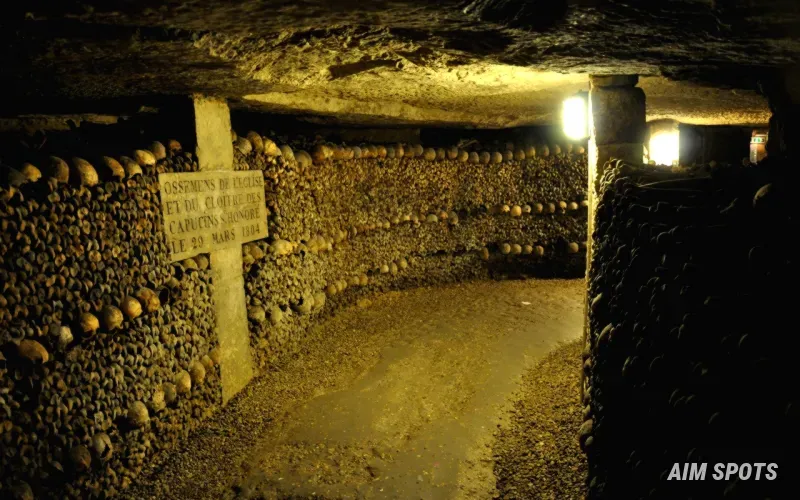
While Paris is famous for its glowing monuments and romantic cafes, a much darker world exists right beneath your feet. The Catacombs of Paris are home to the remains of over six million people, stacked neatly in a labyrinth of ancient tunnels.
This massive underground ossuary wasn't originally built for the dead. These tunnels were actually limestone quarries that provided the very stone used to build the city's grandest structures.
By the late 18th century, Paris faced a gruesome problem: its cemeteries were so overcrowded that they were literally bursting into people's basements. The smell was unbearable and the health risks were even worse.
From Overflowing Graves to an Underground Empire
In 1780, a basement wall near the Holy Innocents' Cemetery collapsed under the weight of a mass grave. This disaster forced the city's hand, leading to a massive project to move the dead underground.
For two years, nightly processions of black-covered wagons carried remains through the streets of Paris. They were dropped into mine shafts near the Rue de la Tombe-Issoire, creating what we now know as the "Empire of Death."
Today, visitors enter through the old city gate known as the Barrière d’Enfer, which translates to the "Gate of Hell." You can find more about the preservation of such sites on Wikipedia.
Who Rests in These Tunnels?
The Catacombs serve as the final resting place for both commoners and famous historical figures. During the French Revolution, the remains of many notable victims were transferred here after being exhumed from parish cemeteries.
- Maximilien Robespierre, the famous revolutionary leader.
- Charlotte Corday, known for the assassination of Jean-Paul Marat.
- Antoine Lavoisier, the father of modern chemistry.
Interestingly, the bones weren't always arranged so artfully. It was Louis-Étienne Héricart de Thury who eventually organized the skulls and femurs into the striking patterns that tourists see today.
Modern Mysteries and the Underground Culture
The Catacombs aren't just a relic of the past; they have a vibrant modern history too. During World War II, the French Resistance used these tunnels as a secret headquarters to plan the liberation of Paris.
More recently, police discovered a fully equipped secret cinema and bar hidden deep in the tunnels! It seems the "Cataphiles"—urban explorers who illegally roam the vast tunnel network—still keep the underground culture alive.
In 2024, the rock band Queens of the Stone Age even recorded a live acoustic performance in the tunnels. It took the band 18 years to get the necessary permissions for such a unique event, as noted in various Forbes lifestyle reports on exclusive travel experiences.

A Warning for the Brave
If you decide to visit, you'll be greeted by a sign that reads: "Arrête! C'est ici l'empire de la Mort" (Stop! This is the empire of Death). It is a chilling reminder of the millions who rest in silence just a few meters below the busy Parisian traffic.
One famous story tells of Philibert Aspairt, a hospital worker who got lost in the darkness in 1793. His body wasn't found until 11 years later, just steps away from an exit he couldn't see in the pitch black.
Frequently Asked Questions
How many people are buried in the Paris Catacombs?
The Catacombs hold the skeletal remains of approximately six million people, moved there from various Parisian cemeteries between the late 18th and mid-19th centuries.
Can you visit the entire tunnel network?
No, only a very small portion of the 200-mile tunnel network is open to the public. Entering the unauthorized sections is illegal and can be extremely dangerous due to the risk of getting lost or cave-ins.
Why were the Catacombs created?
They were created to solve the public health crisis caused by overflowing city cemeteries. The bones were moved into abandoned limestone quarries to prevent disease and structural collapses in the city above.
Enjoyed Inside the Paris Catacombs: Secrets of the Empire of Death? Why not explore our other posts, such as 10 Historic National Park Lodges You Must Visit, The Heartbeat of History: Restoring Art Carney’s Iconic Watch, and Bannerman Island Tours & Events: Ultimate Beacon Guide.
Comments (0)