

Imagine spending six unforgettable weeks wandering through the sun-drenched valleys of southern Spain. This magical region, known as Andalusia, holds the footprints of ancient empires. From Roman gladiators to Moorish caliphs and Catholic monarchs, history comes alive here in spectacular fashion. Also read: Fuengirola Travel Guide: The Ultimate Coast & Food Escape.
If you plan your journey just right, you can trace this cultural evolution city by city. Let us dive into the perfect route through Malaga, Ronda, Córdoba, Granada, and Seville to help you prioritize your next adventure.
Málaga: The Perfect Historical Gateway
Your journey begins in the coastal city of Málaga, which offers a brilliant introduction to the region's layered past. Here, you can stand in a first-century Roman Theatre before walking straight into medieval Islamic fortresses. The theater itself was buried for centuries until its surprise discovery in 1951.
Towering right above the theater is the magnificent Alcazaba, a double-walled fortress built by Moorish rulers. Walking through its outer gates feels like entering a secret maze of lush gardens and cascading water features. Once inside, you will find beautiful courtyards decorated with delicate stone carvings and traditional cobblestone mosaics.
For the ultimate panoramic view of the bay, climb up to the Castillo de Gibralfaro. This fourteenth-century castle was connected to the Alcazaba by a heavily fortified walkway. Later, when Christian forces conquered the city in 1487, they converted the castle mosque into a church and used the site as a military barracks.
Do not miss Malaga’s unique cathedral, built on the site of a former grand mosque. It is famously nicknamed La Manquita because its south tower was left completely unfinished to save money. You can admire its massive facade from the surrounding narrow streets, which make for a challenging but rewarding photo opportunity.
Conquering the Thrilling Caminito del Rey
Are you craving a bit of outdoor adventure? Take a short trip from Málaga to tackle the famous Caminito del Rey.
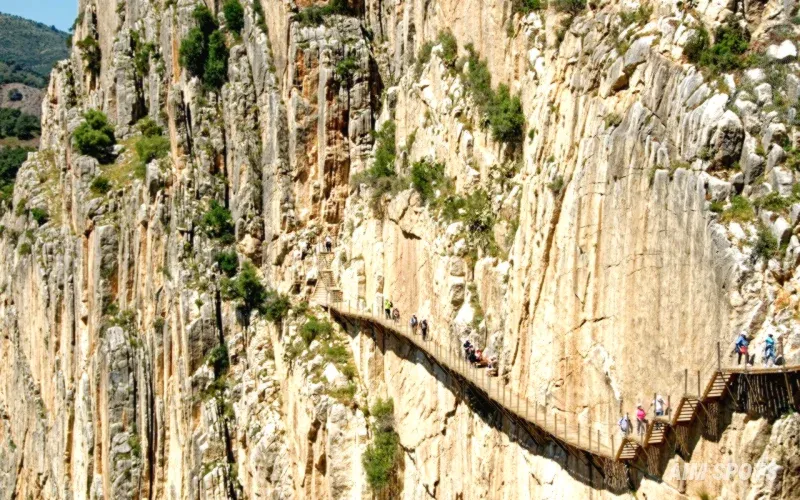
This legendary path hangs a thrilling 100 meters above the rushing river inside the Gaitanes Gorge. Originally constructed in 1905 for hydroelectric dam workers, it was rebuilt in 2015 to offer a completely safe and highly scenic day hike. Be sure to book your tickets weeks in advance on their official portal, as individual slots sell out rapidly.
Ronda: Cliffs, Bridges, and Ancient Baths
Next up is Ronda, a jaw-dropping town perched dramatically on the edges of a deep canyon. The city is split in half by this sheer gorge, connected only by three spectacular historic bridges. The most famous is the Puente Nuevo, a towering stone masterpiece completed in 1793 that rises 98 meters from the riverbed.
If you follow the hiking trails down into the valley, you will get a spectacular, cost-free view of the bridge framing the cliffs. For a taste of medieval life, visit the local Arab Baths dating back to the thirteenth and fourteenth centuries. These exceptionally preserved thermal chambers feature star-shaped skylights and arched ceilings that create a mesmerizing atmosphere.
Córdoba: The Heart of the Caliphate
As you move inland to Córdoba, the profound legacy of Islamic Spain truly takes center stage. Walking across the ancient Roman Bridge leads you directly to the legendary Mosque-Cathedral of Córdoba. This architectural wonder is easily one of the most breathtaking historical monuments in Europe.
Inside, you will find yourself surrounded by an endless forest of red-and-white double arches resting on recycled Roman columns. Instead of demolishing this Islamic masterpiece after the reconquest in 1236, Christian rulers chose to preserve the structure, building a Renaissance cathedral nave right in its center. To save some money, you can enter for free between 8:30 AM and 9:20 AM before the official tourist hours begin.
Just outside the city lies Medina Azahara, the ruins of a tenth-century palace-city built by Caliph Abd al-Rahman III. Though only ten percent of "The Shining City" has been excavated, wandering past the Eastern Gate and the House of Ja'far is incredibly evocative. Be sure to skip the underwhelming local Arab baths in the city center and focus your time here instead.
Granada: The Crown Jewel of Moorish Spain
Granada is home to the world-renowned Alhambra, the final stronghold of the Nasrid Dynasty. This sprawling palace complex represents the absolute pinnacle of Moorish art and architecture in Spain. Because of its massive popularity, you must secure your tickets at least a month before your arrival.
The Nasrid Palaces are the crown jewels of the complex, featuring walls carved with intricate Arabic poetry and lovely reflective pools. Next door, the Generalife gardens offer a tranquil escape filled with sweet-smelling flowers and trickling fountains. Afterward, head to the San Nicolas Viewpoint in the Albaicín neighborhood to watch the sunset paint the Alhambra in warm golden hues.
For a unique cultural experience, head into the Sacromonte neighborhood to watch a traditional flamenco show inside a natural cave. To balance the history, you can also enjoy a scenic hike through the hanging bridges of Los Cahorros in nearby Monachil.
Seville: A Grand Finale of History and Festivity
Your journey concludes in vibrant Seville, where monumental history meets lively cultural traditions. Start your exploration at the Royal Alcazar, a breathtaking palace complex that is still in active use by the Spanish royal family. Its Moorish-style rooms, commissioned by Christian kings, feature dazzling colors and intricate wood carvings that rival the Alhambra.
Just seven kilometers outside Seville lies Italica, the oldest Roman settlement in Spain and the birthplace of emperors Trajan and Hadrian. You can marvel at its massive amphitheater, which once held up to 35,000 spectators, and view beautifully preserved mosaic floors in the ruins of ancient mansions. If you want to see more of these treasures, visit the Palace of the Countess of Lebrija back in town, which offers free ground-floor entry on Friday mornings.
Conclude your trip by visiting the Seville Cathedral, the largest Gothic cathedral on earth, where you can find the tomb of Christopher Columbus. If you are lucky enough to visit during Holy Week, you will witness spectacular, emotional processions that have filled the city's streets since the sixteenth century.
Frequently Asked Questions
How can I visit the Mosque-Cathedral of Córdoba for free?
You can enter the Mosque-Cathedral for free daily between 8:30 AM and 9:20 AM. Visitors are ushered out at 9:20 AM before morning mass, after which paid admission begins.
What is the best way to get tickets for the Alhambra in Granada?
You should purchase your Alhambra tickets online at least one month in advance. Tickets sell out very quickly due to strict daily visitor limits at the Nasrid Palaces.
What makes the Roman ruins of Italica near Seville so special?
Italica was the very first Roman settlement in Spain, founded in 206 BCE. It is the birthplace of emperors Trajan and Hadrian and features one of the largest Roman amphitheaters ever built.
Enjoyed Andalucia Road Trip: 5 Magic Cities You Must Visit? Why not explore our other posts, such as 10 Historic National Park Lodges You Must Visit, Breathtaking Historic Sites Where the Past Meets the Present, and The Heartbeat of History: Restoring Art Carney’s Iconic Watch.
Comments (0)